

The Coriolis Effect: The Key to Hurricane Rotation
Hurricanes, those powerful meteorological phenomena, are governed by strict physical laws dictated by Earth’s rotation. Their formation requires two essential elements: warm ocean waters and the Coriolis effect. The Coriolis effect is an apparent force generated by Earth’s rotation, influencing the direction of moving air masses.
In the Northern Hemisphere, this force causes hurricanes to spin counterclockwise. In the Southern Hemisphere, cyclones (as they’re called there) rotate clockwise. This difference in spin direction is crucial, as it prevents hurricanes from crossing the equator.

Why Hurricanes Never Cross the Equator
At the equator, the Coriolis effect drops to zero. Without this force, air cannot organize into a spiral, which is essential for a hurricane to form or survive. Even a storm that forms near the equator would lose its structure if it tried to cross it. That’s why no tropical storm has ever been recorded crossing this imaginary line.
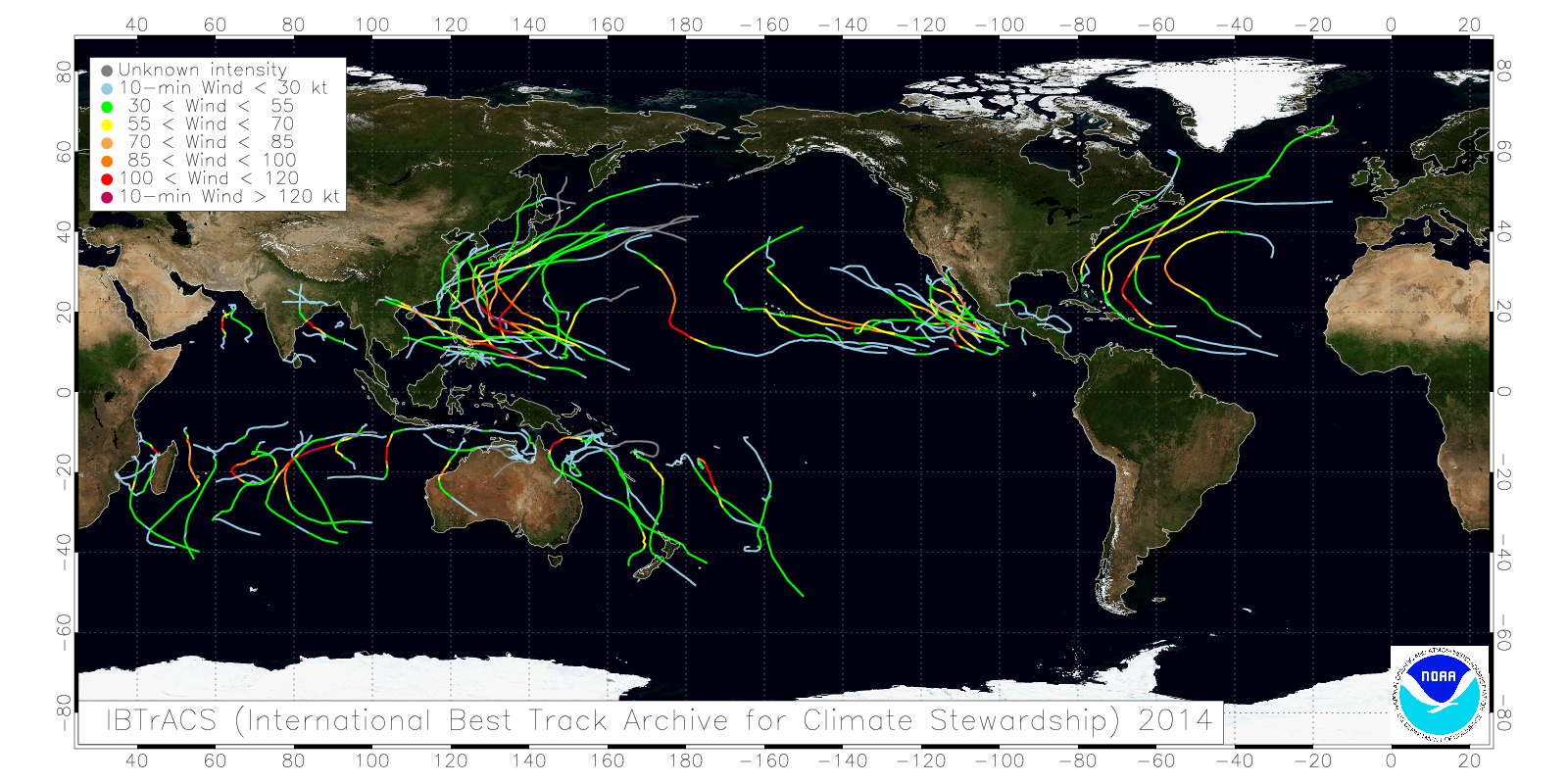
Scientists have observed that hurricanes cannot form within 5 degrees of latitude from the equator. A global hurricane trajectory map makes this strikingly clear: there’s a distinct gap around the equator, free of storms.
The “No-Storm Zone” Around the Equator
This natural, invisible barrier divides our planet not just geographically, but through the fundamental forces of nature. It shows how physical laws govern weather patterns and reminds us that even the most violent storms must obey the rules of the Earth.